

Beacon’s day programs support adults with intellectual and developmental disabilities through structured activities, skill-building, and time in the community. Each program is shaped around the people who attend. Participants may work on daily living skills, build relationships, try new activities, volunteer, spend time in the community, or focus on goals that are important to them. Programs, schedules, and available supports vary by location. Our team can help you understand what is available near you and whether a Beacon day program may be a good fit.
Is a Day Program the Right Fit?
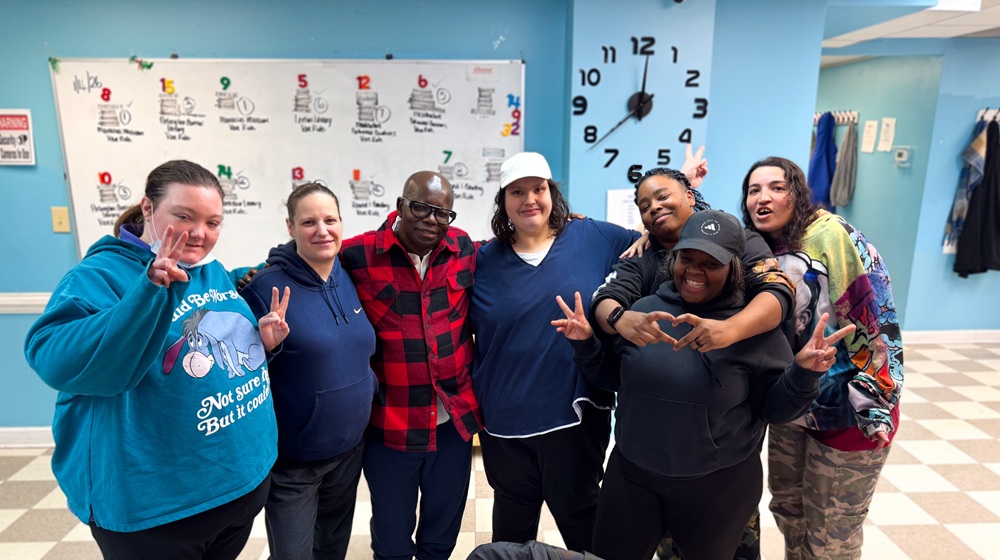 Day programs can provide structure during the week, opportunities to connect with others, and support with practical or personal goals.
A Beacon day program may be a fit for someone who wants to:
- Build or maintain daily living skills
- Spend more time in the community
- Meet people and develop relationships
- Take part in social, recreational, or volunteer activities
- Work toward greater independence
- Receive support during the day outside the home
Every person comes to the program with different interests, abilities, and support needs. Beacon reviews each referral to understand the individual, what they want to work toward, and whether a local program can provide the right setting and support.
Beacon’s day programs primarily serve adults age 18 and older with intellectual and developmental disabilities. Eligibility, funding requirements, and available support vary by state and program.
What a Day at Beacon Can Look Like
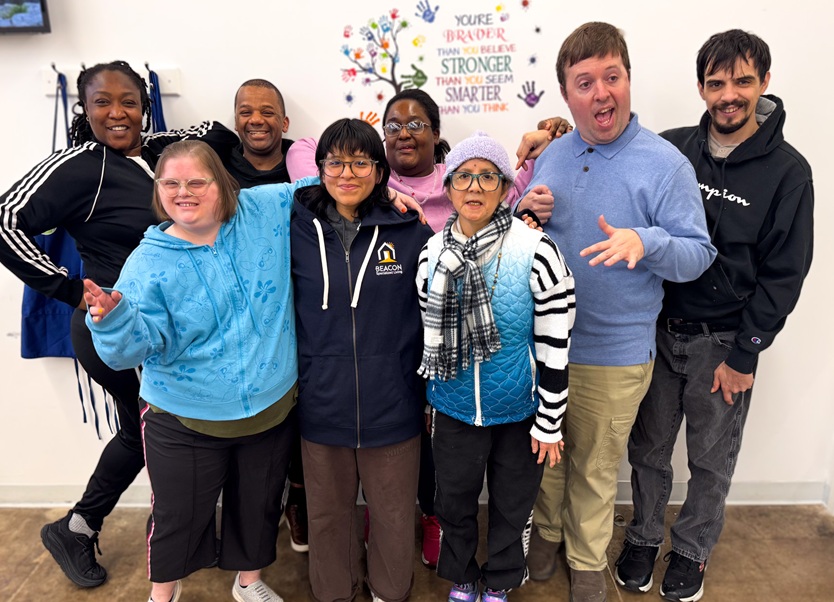 Beacon’s day programs offer a consistent schedule, adapted for each individual’s backgrounds, support needs, and preferences. These day services for adults with disabilities are designed to build independence, confidence, and meaningful community connections.
Participants engage in a wide range of activities that support skill-building across multiple areas, including:
- Arts, crafts, music, and other creative activities
- Games, group activities, and social events
- Exercise, recreation, and outdoor activities
- Cooking and daily living skill practice
- Shopping, budgeting, and money-management activities
- Visits to parks, libraries, stores, museums, and community events
- Volunteer opportunities
- Communication and relationship-building activities
- Reading, math, and other educational activities
- Work exploration or employment-readiness activities
Participants may also have time to relax, talk with friends, celebrate birthdays or holidays, or choose activities they enjoy.
Activities change based on participant interests, available community opportunities, weather, staffing, and program resources. Some locations also create monthly activity calendars so participants and families can see what is planned.
Site-Based Programs
Site-based programs provide structured activities in a dedicated program setting.
Participants may take part in group activities, creative projects, recreation, life skills training, and social events. Some locations include several rooms or spaces designed for different types of activities.
Participants may move between activities based on their schedule, interests, and individual needs.
Community-Based Programs
Community-based day support programs give participants opportunities to spend time outside the program site.
Activities may include volunteering, visiting local businesses, attending events, using community resources, shopping, practicing money management, or taking part in recreation.
These activities help participants become more comfortable in their communities and practice skills in everyday settings.
Individual Community Coaching
Some Beacon locations offer one-to-one support for a specific community-based goal.
Community coaching may help a participant work through challenges related to relationships, safety, personal care, self-management, volunteering, or another area identified during planning.
Service names and definitions vary by state. Beacon’s intake team can explain which options are available at each location.
Real Stories from Our Day Programs
Beacon’s Day Programs are filled with moments of connection, joy, and progress — big and small. Here are a few stories that reflect what those days can feel like:
“This is my favorite place to be.” One participant started at Beacon while living in a group home, working one-on-one with staff to build his cooking, budgeting, and self-advocacy skills. Over time, he gained the confidence to move into a supported apartment with two of his peers. Now, he’s known in the program as the go-to person for helping others practice daily living tasks.
Mary loves routines that feel familiar and fun. Most mornings, she heads straight for the kitchen to help set up cooking class. After lunch, she plays cards with staff or dances during music time, and always asking for her favorite playlist.
Elizabeth lights up on jewelry-making days. She carefully picks out her beads and colors, and she always makes a second bracelet “just in case a friend wants one.” She says coming to program means she gets to “see her people and laugh.”
When Alan missed a day, it didn’t feel the same. He called to check in, and staff passed the phone around so he could talk to his usual lunch group. The next day, he walked in to high-fives and hugs. One friend told him, “We saved your spot.”
All stories are anonymized to protect participant privacy.
Support Based on the Individual
Beacon uses a person-centered approach to day programming. Staff learn about each participant’s strengths, interests, communication style, support needs, and personal goals.
Support can be adjusted based on what the person needs and how they prefer to participate. Plans may also change over time as the participant develops new interests, reaches goals, or needs a different level of assistance.
Daily Living and Skill Development
Day programs can help participants build or maintain skills they use at home, in the community, and in their relationships with others.
Support may focus on:
- Daily living skills
- Communication
- Social skills
- Self-advocacy
- Community safety
- Decision-making
- Building routines
- Developing relationships
- Greater independence
Progress looks different for every person. Our team builds on each participant’s abilities and provides support where it is needed.
Behavioral and Communication Support
Some participants need additional support with communication, behavior, supervision, or changes in routine.
Depending on the location, support may include:
- Individual support strategies
- Positive Behavioral Supports
- Staff trained to follow behavior support plans
- Behavioral consultation
- Small-group or one-to-one assistance
- Communication supports
- Coordination with an existing care or clinical team
Support From Families and Care Teams
Families, guardians, case managers, support coordinators, and other providers may be involved in the planning process when appropriate.
This can include sharing information about:
- The participant’s interests and preferences
- Communication needs
- Daily routines
- Behavioral support needs
- Individual goals
- Health or safety considerations
- Changes that may affect participation
The level and type of communication depend on the participant, program, and support arrangement.
What to Look for When Choosing a Day Program
The right program depends on the person, their goals, and the type of support they need.
When comparing day support programs for adults with disabilities, it may help to ask:
- What does a typical day look like?
- Are activities chosen based on participant interests?
- Does the program offer site-based activities, community activities, or both?
- What level of staffing and supervision is available?
- Can staff support the person’s communication or behavioral needs?
- How are families, guardians, and support teams kept informed?
- Are part-time schedules available?
- Is transportation available?
- What funding sources does the program accept?
- Can the participant visit or tour before enrolling?
Our team can answer these questions for each program and help determine whether a location matches the participant’s needs.
Find a Day Program Near You
Missouri
Horizon – 2606 Rose Dr, Columbia MO
New Jersey
Sullivan – 370 Sullivan Way, Ewing NJ
Fusion and Loeser – 559 Union Ave, Middlesex NJ
Roszel A and Roszel B – 13 Roszel Rd, Princeton NJ
Eves – 4B Eves Drive, Marlton NJ
Virginia
Horizons Life – 3401 Commission Court Suite #101 Woodbridge, VA
Horizons Explorations – 3460 Commission Court Suite #101 Woodbridge, VA
Charming Concepts – 9506 Workhouse Way Building W-9 Lofton, VA
Horizons Manassas – 10050 Pennsylvania Ave Manassas, VA
Ohio
Day Programming Office – 600 Lakeview Plaza, Suite A Worthington, OH
Pennsylvania
ArtWorks Day Program – 236 Penn Avenue, Scranton, PA
Bridge Street – 99 Bridge Street, Tunkhannock, PA
Cascade Program – 100 Cascade Drive, Unit D, Allentown, PA
Genet Day Services – 628 Genet Street, Scranton, PA
KDS (Keystone Day Services) – 1729 Pittston Ave, Scranton, PA
La Plume Voc Program – 2100 RT 6 & 11, La Plume, PA
Montrose Day Program – 17079 State Route 706 East, Montrose, PA
Mundy Street – 180 Mundy Street, Wilkes Barre Township, PA
Penn Industries – 921 Penn Avenue, Scranton, PA
Sanderson – 1501 Sanderson Avenue, Scranton, PA
Get in touch with us if you have any questions or are ready to begin the enrollment process!
Funding, Transportation, and Eligibility Details
Program costs, funding, transportation, and eligibility requirements vary by state and location.
Funding and Program Costs
The cost of an adult day program depends on the state, program, schedule, services, and funding source.
Some participants may receive funding through:
- Medicaid waiver programs
- County funding
- Managed care organizations
- State or local disability programs
- A referring agency
- Other approved funding sources
Funding and authorization requirements are different in every state. Our intake team can explain what a specific program accepts and which documents may be needed.
Transportation
Transportation availability depends on the program and location. Some locations may provide transportation to and from the program, transportation for community activities, or both.
Before enrolling, ask your intake coordinator about:
- Pickup and drop-off availability
- Geographic service areas
- Transportation schedules
- Funding or authorization requirements
- Transportation for community outings
- Any transportation the participant or family must arrange
Eligibility and Program Fit
Beacon’s day programs primarily serve adults age 18 and older with intellectual and developmental disabilities.
Final eligibility also depends on:
- The services available at the selected location
- Program capacity
- The participant’s support needs
- Funding or authorization
- State requirements
- Whether the program can provide the appropriate setting and level of assistance
Our intake team reviews each referral individually and can help find the best day program near you.
How to Get Started
The referral and enrollment process varies by state, but it usually begins with a conversation about the participant and the type of program they are looking for.
- Contact Beacon or Submit a Referral. A family member, guardian, case manager, support coordinator, provider, or other referral partner can contact Beacon.
- Talk With the Intake Team. Beacon will ask about the participant’s goals, support needs, preferred location, schedule, funding, and current services.
- Provide Required Information. The program may request eligibility records, medical information, psychological evaluations, behavior support information, funding documentation, or an existing support plan. Requirements vary by state and location.
- Visit the Program. When available, the participant and support team may tour the program, meet staff, and learn more about the daily schedule.
- Complete the Program Review. Beacon will review the referral, available funding, program capacity, and support needs before explaining the next steps.
Get Started
Interested in a Beacon day program? We make it easy to take the next step. Whether you’re a provider, family member, or individual looking for support, we’re here to guide you through the enrollment process.


Additional Resources from Beacon
- Residential Living: Learn about Beacon’s residential options for adults who need support at home, including group living, supported living, and other community-based settings.
- Autism Support: Explore residential, behavioral, clinical, daily living, and community-based support for adults with autism.
- Find Beacon Services Near You: Search for Beacon locations and services available in your state.
- Explore All Beacon Services: View Beacon’s residential, day, community-based, behavioral, and care coordination services.
- About Beacon: Learn about Beacon’s person-centered approach, mission, and ICARE values.
Frequently Asked Questions
What services are available for adults with disabilities?
Services for adults with disabilities may include day habilitation, residential support, community participation, individual coaching, behavioral support, supported employment, care coordination, and other forms of assistance.
Beacon’s day programs focus on structured daytime activities, skill development, social connection, and community involvement. Other services vary by state.
What activities are available in day programs for adults with disabilities?
Activities depend on the program and the people attending.
They may include arts and crafts, music, cooking, games, recreation, volunteering, shopping, budgeting, educational activities, community outings, and daily living practice.
Beacon programs plan activities around participant interests, individual goals, staffing, available resources, and local opportunities.
Who can attend a Beacon day program?
Beacon’s day programs primarily serve adults age 18 and older with intellectual and developmental disabilities.
Eligibility also depends on the person’s support needs, funding, program capacity, and state requirements. Beacon reviews each referral individually. We welcome individuals with a variety of support needs and build personalized plans based on each person’s goals and preferences.
What is day habilitation or a day program?
Day habilitation is structured daytime support that helps adults with disabilities develop or maintain daily living, communication, social, and community-participation skills.
Services may take place at a program site, in the community, or in both settings.
States may use different names for these services, including Adult Day Support, Group Day, Community Engagement, Community Coaching, or Day Option Programs.
How much does an adult day program cost?
Costs depend on the state, program, services, schedule, and funding source.
Some participants receive funding through Medicaid waivers, county programs, managed care organizations, or referring agencies.
Contact Beacon for information about funding and authorization requirements at a specific location.
Is the program covered by Medicaid?
Yes. In most states where Beacon operates, individuals who qualify through their state’s developmental disabilities system may receive Medicaid funding for day habilitation services, often up to 30 hours per week. Self-pay options may also be available. Because coverage varies by state, we encourage you to contact us or visit your state page for more information about funding options near you.
Does Beacon provide transportation?
Some Beacon locations provide transportation to and from the program, transportation for community activities, or both.
Availability, service areas, schedules, and funding requirements vary by location.
Can I tour a Beacon day program?
Yes! Beacon offers tours of our homes and day programs. Contact Beacon to ask about tour options for the program you are considering.
How do I refer someone to a day program?
You can begin by submitting a referral using our online form or by contacting our team. We’ll guide you through the enrollment process and help determine which services are the best fit.