
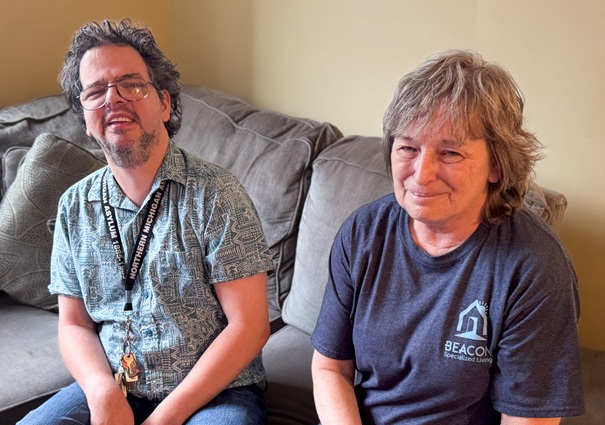
Beacon’s residential programs for adults with autism integrate living, behavioral, and clinical support in one continuous model, designed for adults who need more than scheduled therapy provides. For over 50 years, we’ve served adults with complex needs in community-based settings, combining Individualized Supported Living (ISL), Shared Living (SL), and 24/7 staff support under one coordinated care framework.
What Adult Autism Residential Programs Involve
Adult autism residential programs provide ongoing, home-based support for adults who need structured care beyond outpatient therapy or day programming. The defining feature of a well-run program is integration: behavioral support, clinical oversight, and daily living assistance operate through the same staffing model and the same environment, built around one individualized plan.
For adults with complex behavioral needs, that integration is what distinguishes residential care from every other option in the continuum. Beacon’s programs don’t separate behavioral therapy from housing support. They operate as one service, running through every part of the person’s day.
Who This Is For
Beacon serves adults 18 and older with autism who require 24/7 embedded residential support. Our programs are designed for adults with co-occurring behavioral, clinical, and developmental needs, including those who have aged out of school-based services or struggled to find a setting equipped for their level of complexity.
Our Model at a Glance
24/7
Continuous Support
Adults
Complex Needs Focus
ISL & SL
Community-Based
PBS
Evidence-Based Framework
“Integrated living, behavioral, and clinical support — every day, in the home and community.”
Residential Support Models
The right residential model depends on each person’s support needs, living preferences, and long-term goals. Beacon operates three core program types.
Individualized Supported Living (ISL)
In ISL, the adult lives in their own home, an apartment, or a small community-based setting with dedicated staff support structured around their individual plan. Support is built into daily routines across every environment where the person lives, with no scheduled sessions working around the day. This model fits adults who benefit from high environmental consistency and a staffing structure built specifically around them.
Shared Living (SL)
In Shared Living, the adult lives in a home alongside other residents, with continuous staff presence and an individual support plan for each person. Beacon’s Shared Living homes operate with the same PBS framework and clinical oversight as ISL placements, and suit adults who do well with peer interaction and benefit from consistent household routines.
Crisis and Stabilization
For adults in high-acuity periods or transitioning from a more intensive setting, Beacon offers structured crisis and stabilization support. These programs provide de-escalation, sensory regulation, and safe community transition planning, with the goal of stabilizing the individual before moving into a longer-term ISL or SL placement.
How Beacon Delivers Support
Beacon’s residential model is built around six integrated components that work together across every placement.
Behavioral Support at the Core
Positive Behavior Support (PBS) is the framework that runs through every Beacon residential program. Direct Support Professionals implement individual behavior plans during the actual moments of daily life: morning routines, community outings, meals, transitions. Behavior plans address challenging behaviors, sensory regulation needs, and skill development specific to each person.
Registered behavior technicians and coaches work alongside DSPs in real-world settings, not in separate sessions. Progress is tracked through consistent data collection, which feeds back into each person’s plan on an ongoing basis.
Crisis Response and Stabilization
When higher-acuity situations arise, Beacon’s crisis and stabilization support provides structured de-escalation, sensory regulation, and safe community transition planning.
The goal is to address the immediate situation without removing the individual from their community or breaking continuity in their support relationships.
Clinical and Medical Oversight
Each Beacon residential program includes licensed behavior analysts, nursing staff, psychiatry, social workers, and counselors as part of the support team. This coordination is particularly important for adults with autism who have co-occurring medical, psychiatric, or behavioral health conditions.
Clinical oversight is embedded in the residential model and coordinated across services rather than accessed separately by the resident.
Trained Direct Support Professionals
Direct Support Professionals are Beacon’s primary point of contact for residents. They’re trained in behavior management, trauma-informed care, PBS implementation, and data collection. Staffing continuity (the same staff, same routines, same relationships) is a deliberate feature of how Beacon operates.
Person-Centered Planning
Every support plan starts with the individual: their goals, their preferences, their daily life as they want to live it. Supports are individualized based on each person’s needs and focused on increasing independence and quality of life over time.
Daily Living and Skill Development
Support in the home covers daily living skills, communication, social skills, and personal care. Day programming and community integration activities extend that into real-world environments, building tolerance, greater independence, and sustained community participation over time.
Why Beacon is Different
A New Standard for Adult Autism Care
Traditional clinic-based therapy was built primarily for children in structured, therapist-driven sessions with discrete start and end times. Beacon’s model was built for adults who need something that functions differently.
“Beacon’s model provides integrated living, behavioral, and clinical support — helping individuals with autism build person-centered independence and stability in community-based settings.” — Beacon Specialized Living
| Dimension | Traditional Services | Beacon Model |
|---|---|---|
| Setting | Clinic-based ABA therapy | In-home & community-based |
| Hours | Set therapy hours | 24/7 support environment |
| Delivery | Therapist-driven sessions | DSP + clinical team |
| Population | Primarily children | Adults with complex needs |
| Integration | Separate services | Integrated living, behavioral & clinical |
Where Beacon Operates
Beacon provides autism residential programs for adults across eight states:
Michigan | Minnesota | Missouri | New Jersey | Ohio | Pennsylvania | Virginia | Wisconsin
Our Principles
Guided by ICARE Values
We believe that everyone — regardless of their abilities — deserves to be a full member of their community. Our colleagues practice and serve individuals by our ICARE values.
I
Integrity
Act honestly, speak the truth, and deliver on promises in all that we do.
C
Compassion
Be compassionate, caring, and gentle in every interaction and decision.
A
Advocacy
Encourage and invest in new ideas that elevate equality and community inclusion.
R
Respect
Encourage a variety of thoughts reflecting the diversity of our markets, customers, and workforce.
E
Excellence
Consistently deliver high-quality services that have a positive impact on our communities, our state, and our country.
Resources for Adults with Autism
Families, case managers, and support coordinators navigating residential placement options can find additional guidance through the following organizations.
- Autism Speaks – Resources for Adults with Autism. Autism Speaks maintains a resource library covering housing options, healthcare, employment, and advocacy for adults with autism, including guidance on securing housing and understanding residential supports.
- Autism Society of America – Housing. The Autism Society provides an overview of supportive housing models for adults with autism alongside data on housing access and links to local affiliate networks across the country.
- Autism Housing Network. A platform that connects families, providers, and researchers around housing options for people with autism, and the source for frequently cited statistics on residential support access.
- Social Security Administration – Supplemental Security Income (SSI). SSI provides monthly income support for adults with disabilities who meet financial eligibility requirements. For many adults with autism, SSI is a foundational funding source for residential placement and often comes paired with Medicaid coverage.


Frequently Asked Questions
What adults are eligible for Beacon’s residential programs?
Beacon serves adults 18 and older with autism who require 24/7 residential support. Our programs are designed for adults with complex needs, including those with significant behavioral challenges or co-occurring diagnoses.
How does the referral process work?
Referrals can be submitted by case managers, guardians, hospitals, state agencies, other providers, or families directly. After submission, Beacon’s admissions team conducts a personalized assessment with the individual, their support team, and current providers to evaluate clinical needs, preferences, and care goals. Typical documentation includes a psychological evaluation, social history, current treatment and support plans, medication list, and insurance or benefit information. Once all documentation is received, the admissions process takes one to three weeks on average, with timelines varying based on funding approval and home availability. Start a referral.
How is Beacon’s model different from a standard group home?
Standard group homes provide shared living with generalized staff support. Beacon’s residential programs add individual behavior plans developed and overseen by licensed behavior analysts, 24/7 staffing trained specifically in PBS implementation, integrated nursing and clinical oversight, and data-driven progress tracking built into daily operations.
What is Individualized Supported Living?
Individualized Supported Living (ISL) is a residential model in which an adult with autism lives in their own home or a small community-based setting with dedicated staff support structured around their individual plan. Support is embedded in daily life across every environment the person inhabits, rather than delivered in scheduled appointments.
What is Shared Living?
Shared Living (SL) is a residential model in which an adult lives in a home alongside other residents, with continuous staff presence and an individualized support plan for each person in the home. Beacon’s Shared Living homes operate with the same PBS framework and clinical oversight as ISL placements.
Why is it difficult to find residential programs for adults with autism with complex needs?
Specialized residential programs are in short supply relative to demand. Of adults with complex IDD needs discharged from acute care without appropriate residential support, 21% are readmitted within 90 days. Programs equipped to serve adults with significant behavioral challenges are rarer still, as many providers prioritize individuals with lower support needs. Beacon’s model was purpose-built for this population: adults who need more than most programs are designed to provide.
How does Beacon support adults with complex behavioral needs?
PBS is embedded into every Beacon residential program. Staff implement individual behavior plans during daily routines, collect consistent data, and work with licensed behavior analysts to adjust plans as needed. Crisis and stabilization support is available for higher-acuity situations, with the goal of addressing them without disrupting community placement or support relationships.
Is autism residential care covered by Medicaid?
Medicaid and state Medicaid waiver programs, including Habilitation Supports Waivers, are the primary funding sources for Beacon’s residential programs. Beacon also accepts managed care organization payments and some private pay arrangements. Most services are covered by Medicaid or state funding programs; any potential out-of-pocket costs are discussed prior to admission. Specific waiver programs vary by state — contact Beacon’s admissions team for funding questions specific to your location.
What states does Beacon serve?
Beacon operates autism residential programs across Michigan, Minnesota, Missouri, New Jersey, Ohio, Pennsylvania, Virginia, and Wisconsin. Each state has dedicated administrative offices and local homes and living arrangements. Visit the Locations page to find services for adults with autism near you.